

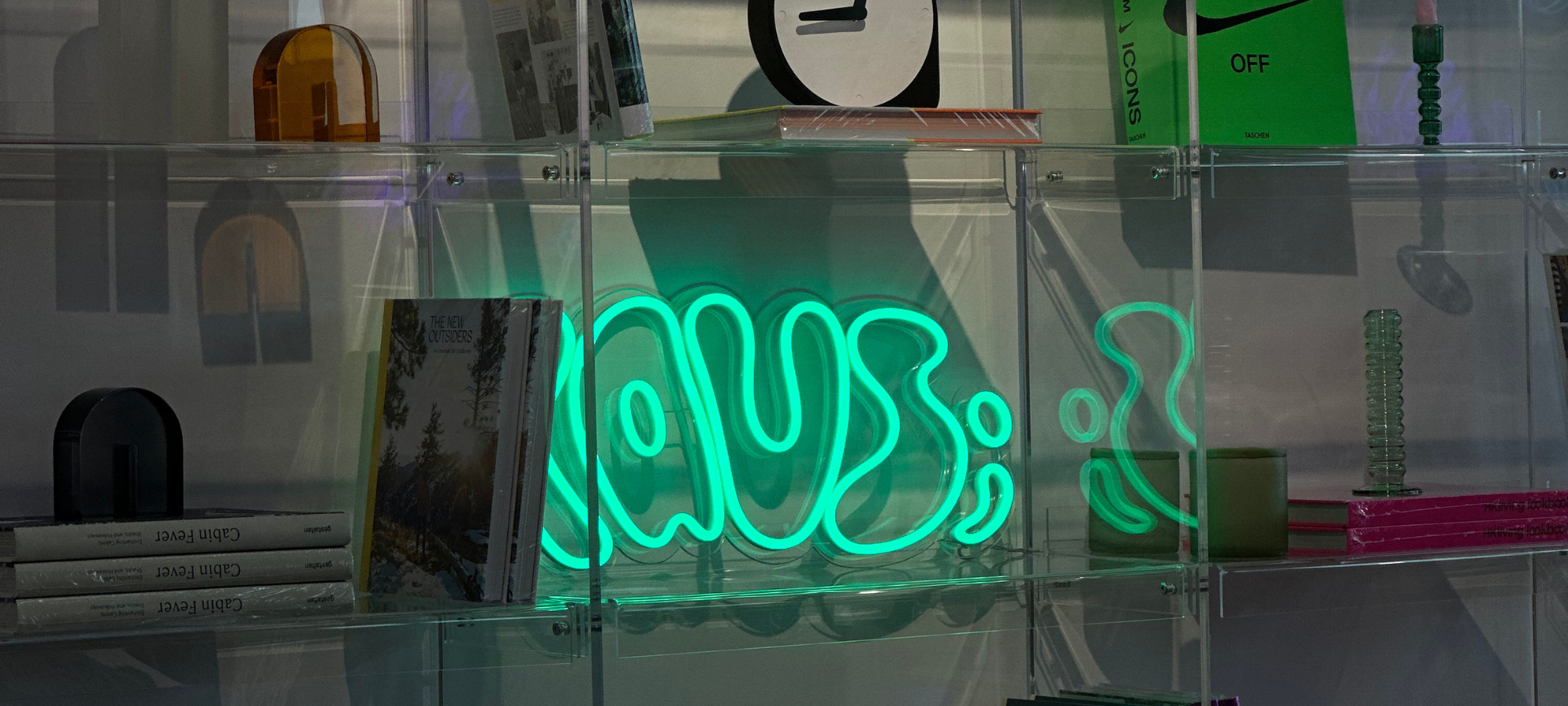
The finest line we make
Acrylic LED
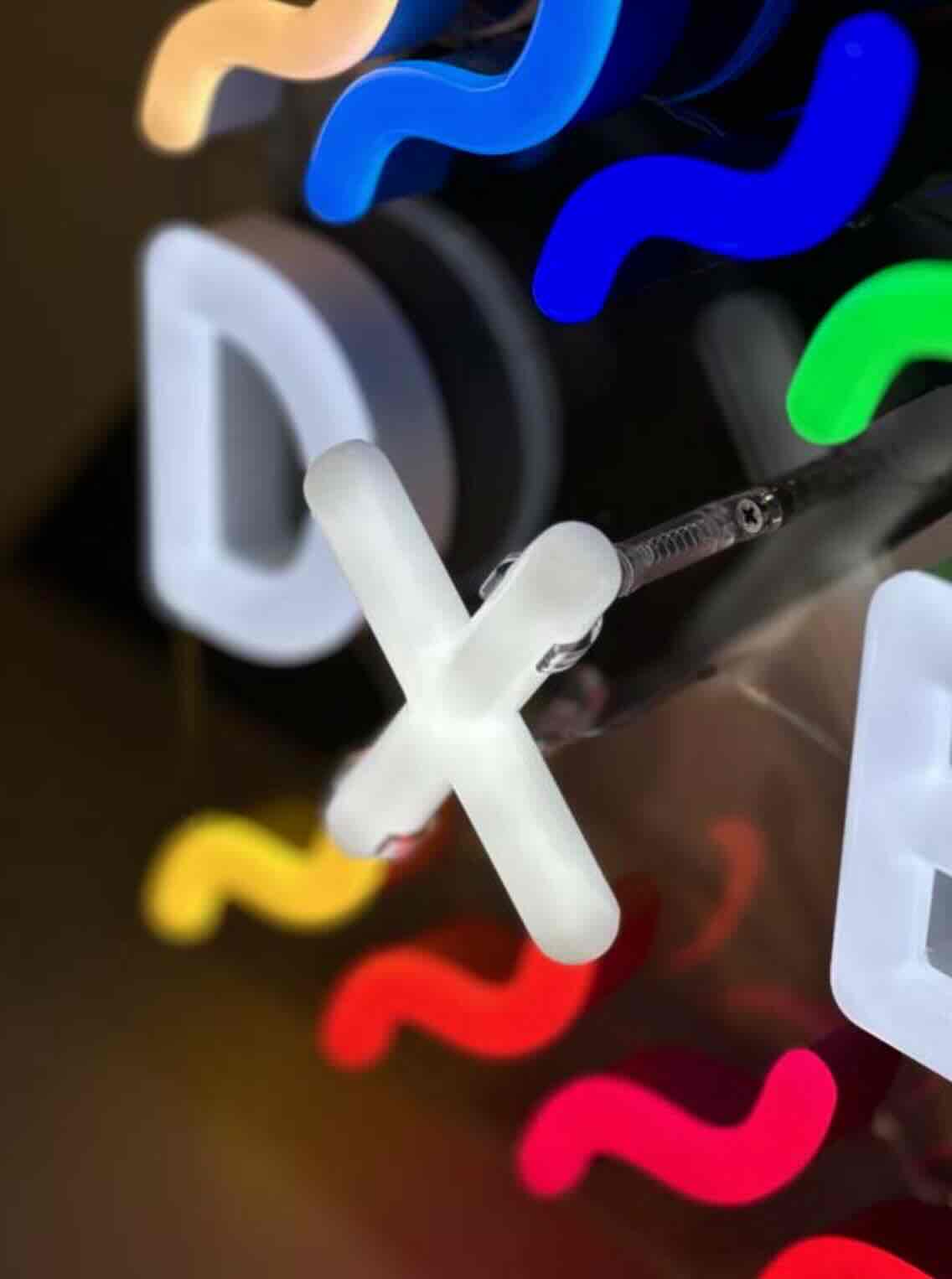
Robust and resistant
ACRYLIC LED
The neon look, in solid cast acrylic. Detail down to a centimetre, nine line thicknesses, and the only one of our three materials you can put underwater.
The details
Acrylic LED
Solid cast acrylic with the light sealed inside. The finest line we make, and the only one of the three you can put underwater.
From
AED 2,200
Solid, not a flexible strip
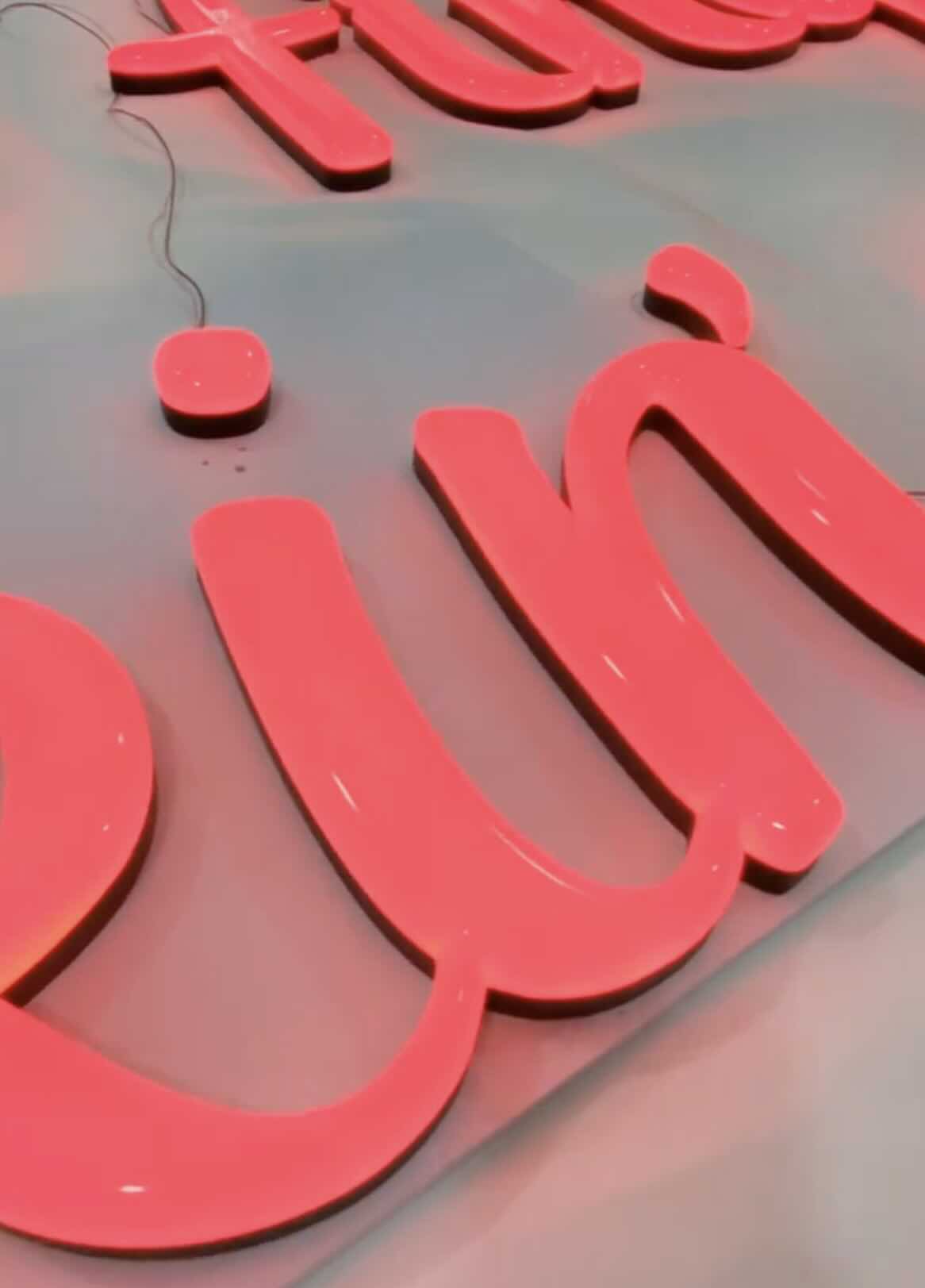
Solid cast acrylic with the light inside it. Rigid enough to carry its own shape, so it mounts bare to the wall, no backing panel, no visible fixings, nothing framing it.
This is what we specify when a piece has to survive a public space: a mall atrium, a hotel terrace, a restaurant frontage, anywhere the work will be looked at closely and has to still look right in two years.
Script, letterforms, a single line across a wall, same material, same build, whatever the design asks for.
Acrylic LED
Where it wins
If your design has a full stop, a dot over an i, a small round mark — acrylic holds it down to a centimetre. LED flex needs a minimum run of around 3cm, so the same mark comes out as a dash. Glass can be blocked out by hand-painting the tube, but the edge is never as sharp.
Nobody tells you this until the artwork comes back wrong. We'd rather say it at drawing stage.
Mounted so you can't see how
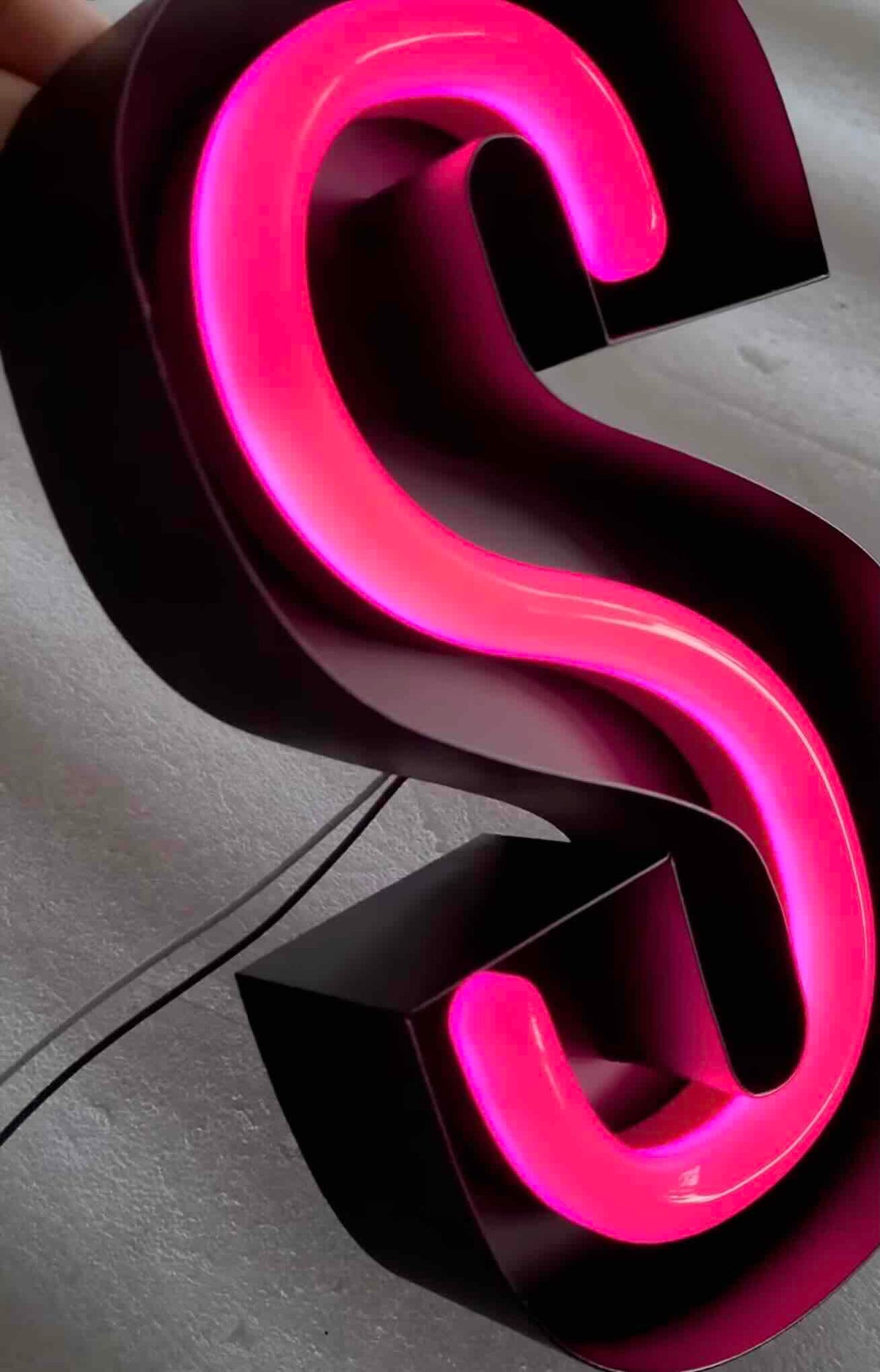
The standard build is 180 degrees — light facing out, flat back, screwed to the wall from behind. Once it's up there is nothing to see but the piece. No frame, no panel edge, no bracket.
A 360-degree version exists, lit all the way round and mounted on clips the way glass neon is. It's a specialist build and it costs considerably more. Most schemes don't need it, and we'll tell you if yours does.
Sourcing & Quality Control
Built to last
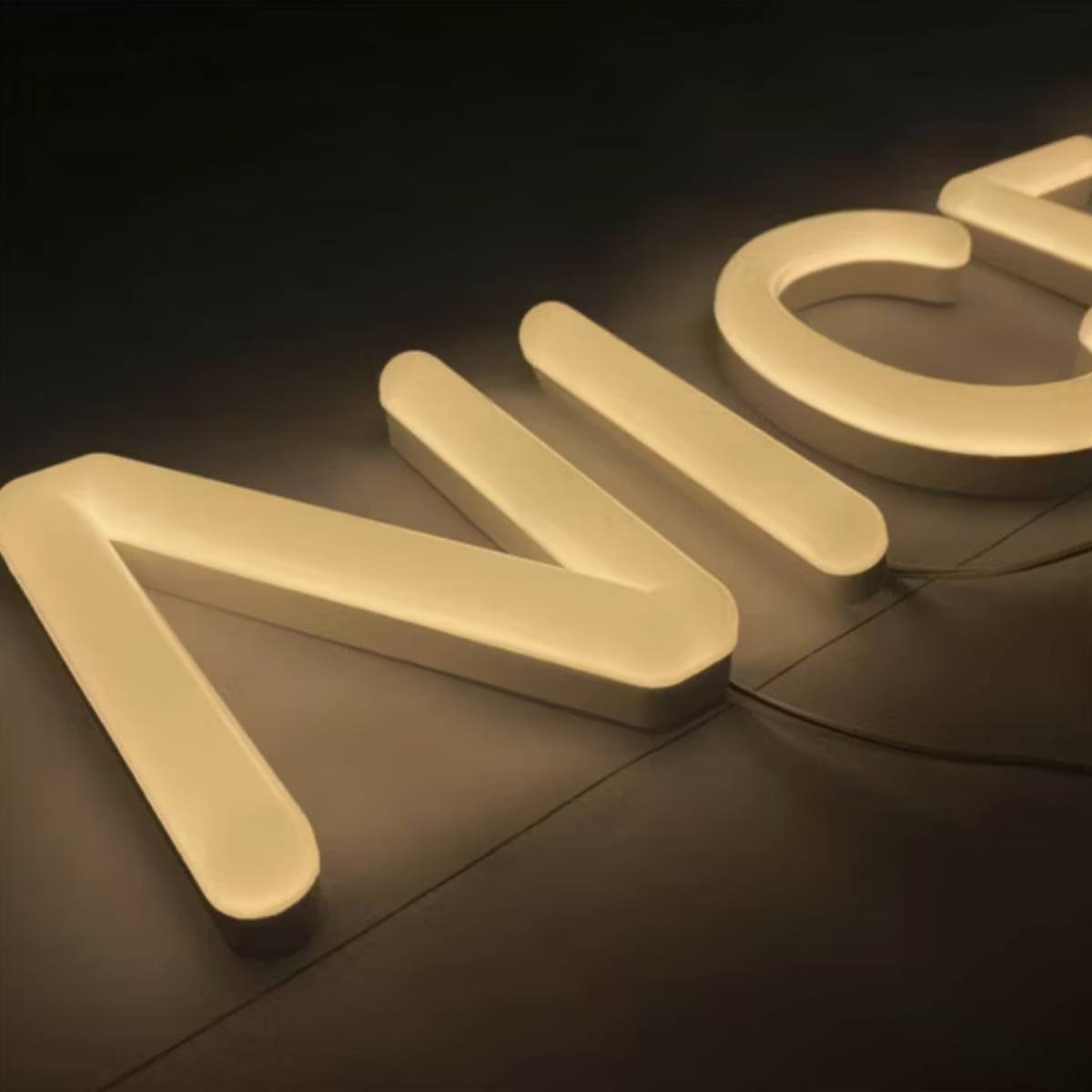
A coloured acrylic reads as that colour when the piece is switched off, and lights to a strong, saturated version of it. A white acrylic sits pale and quiet when it's off, almost disappearing against a light wall, and lights to something softer and more pastel.
So the choice isn't only what colour. It's whether the piece should be an object in the room when it's dark, or vanish until you switch it on. Both are right — it's just easier to decide before we draw than after.

We won't call it that
Not neon
It gives the neon look and it does things glass can't. But it is LED inside acrylic, and calling it neon would make the word meaningless.
Real neon is hand-bent glass filled with gas. We make that too, in the same studio, which is exactly why we're careful about the difference.