
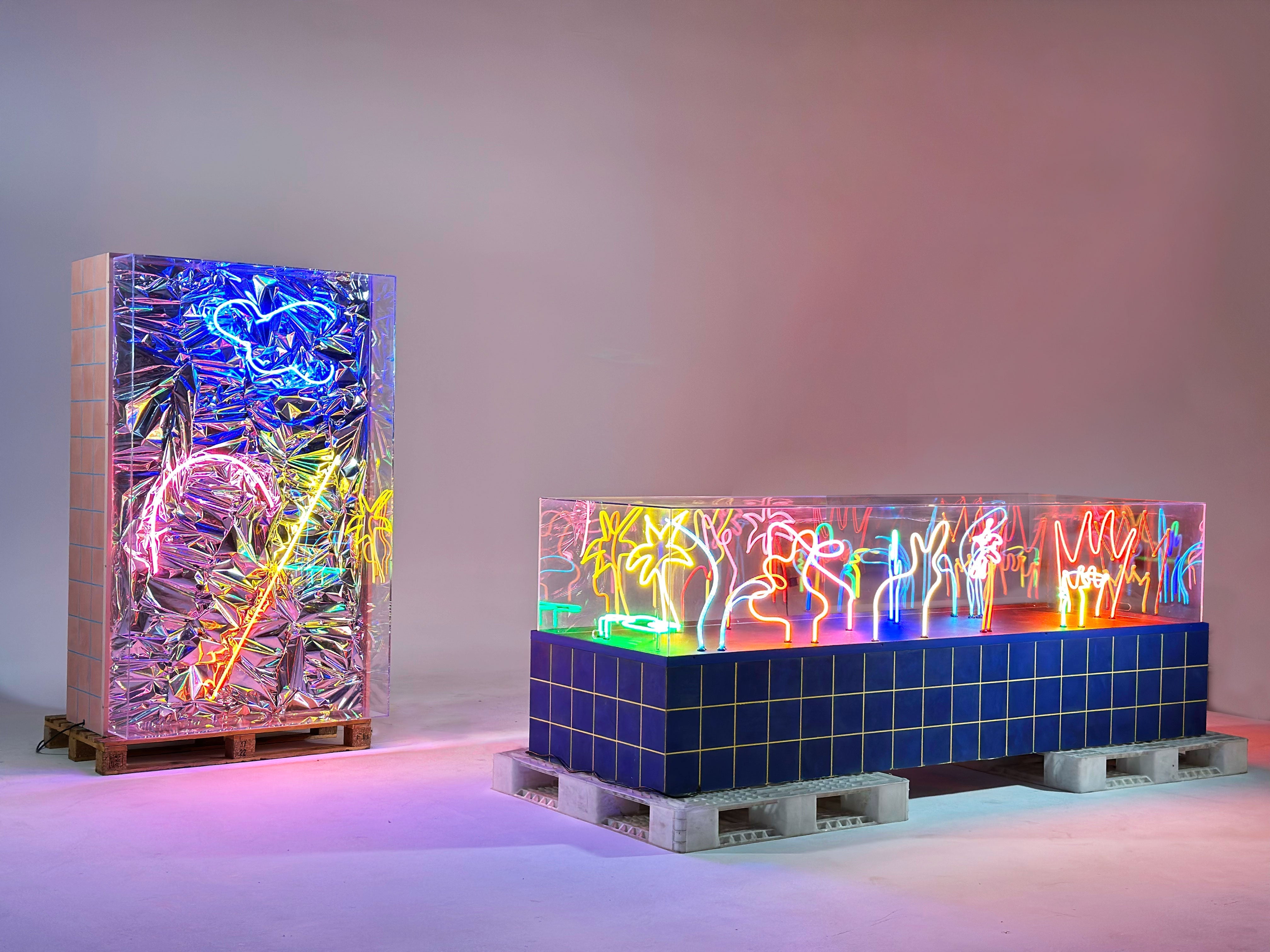
Monumental Neon Art Installations — When Light Becomes Architecture
Monumental light art exists at the intersection of sculpture, architecture, and emotion. When scale enters the equation, neon and light stop functioning as objects and start behaving like environments. Over the past decades, a number of artists have reshaped how light inhabits public and private space — not as decoration, but as presence.
Bruce Nauman — Language at Scale

Bruce Nauman introduced text as confrontation. His large-scale neon works, often unsettling, repetitive, or ironic — forced language into physical space. Words glowed aggressively, turning language into an object you couldn’t ignore. Neon, in his hands, became psychological architecture.
Tracey Emin — Intimacy Enlarged

Tracey Emin redefined monumental neon by making it personal. Her handwritten phrases, scaled up and illuminated, transformed vulnerability into public presence. The power of her installations lies in contrast: delicate handwriting rendered impossible to overlook. Monumentality here is emotional, not just physical.
James Turrell — Light Without Object

While not neon, Turrell’s work is essential to understanding scale in light art. His immersive installations remove fixtures altogether, leaving only perception. Entire rooms become vessels for light, dissolving boundaries between viewer and artwork. Monumentality here is internal — a bodily experience.
Charlotte de Belle — Weight, Reflection, and the Physicality of Light

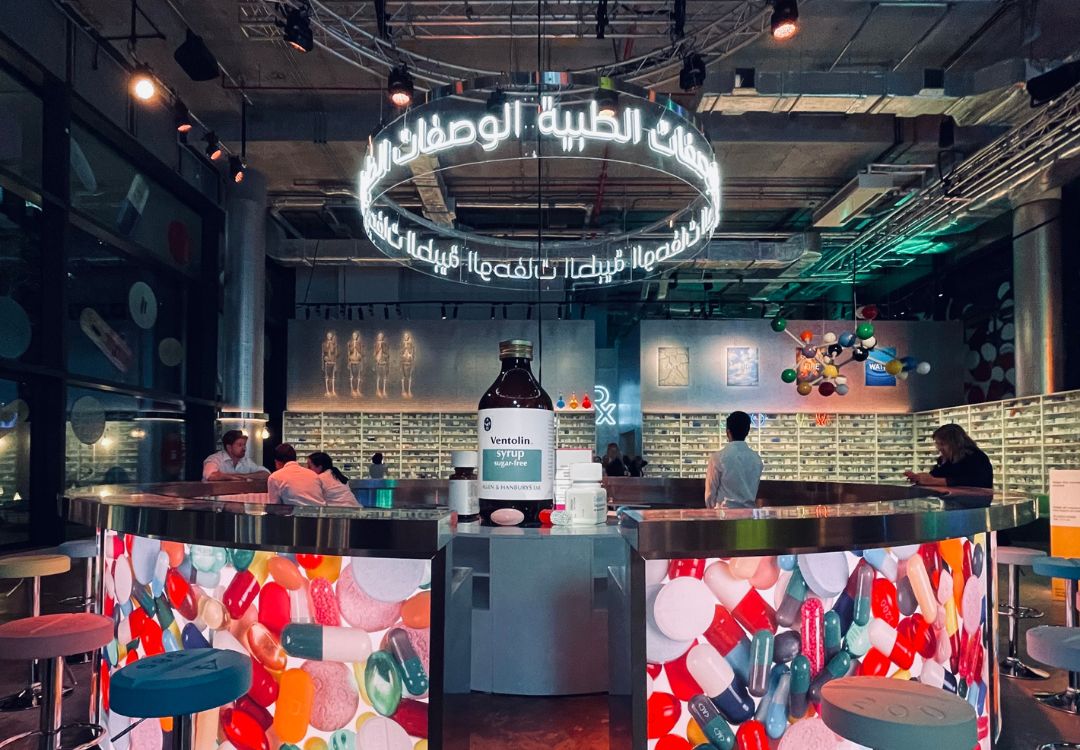
Charlotte de Belle explores neon at scale through contrast, combining fragile glass light with heavy materials such as cement, mirror, and acrylic. Her installations give light physical presence, allowing it to cut through solid forms and multiply through reflection.
Scale in her work is spatial rather than decorative, inviting movement and shifting perception. By pairing traditional neon craft with contemporary materials, her pieces balance delicacy and permanence, treating light as something to be experienced — not just seen.
Monumental neon art is not about being seen from afar, it’s about being felt up close. The artists who succeed at scale understand that light is not just visual. It’s psychological, physical, and deeply human.
When light becomes architecture, the space no longer holds the artwork.
The artwork holds the space.

Written by Charlotte de Belle